Designing Kanaloa with a metal supplier's owner, one daily routine at a time
Kanaloa didn't start from a feature list. I designed it with the owner of Aneka Stainless, around what their team does every day.
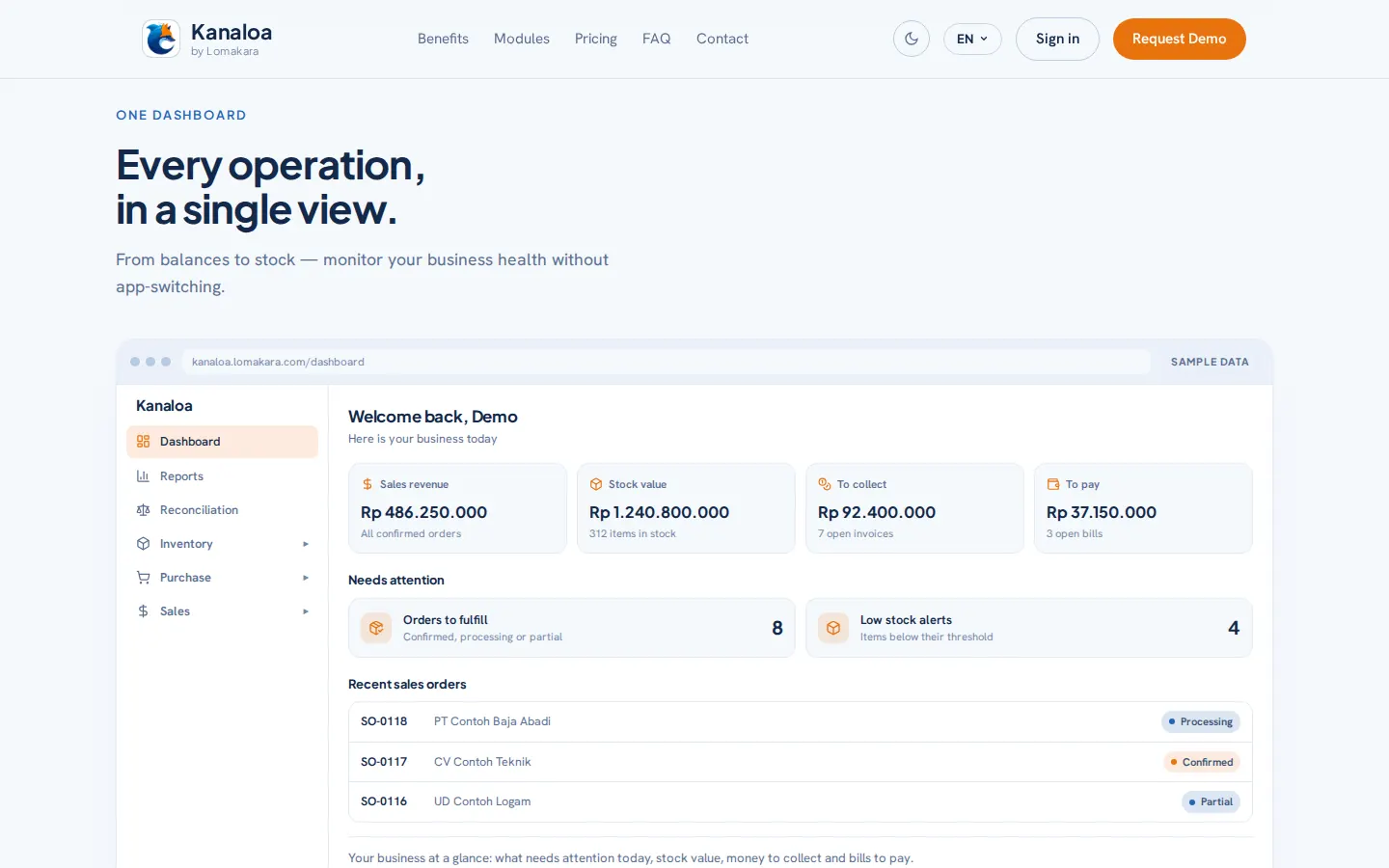
Most business software starts with a feature list. Kanaloa didn’t. I designed it together with the owner of Aneka Stainless, one of the leading metal suppliers in Kota Tangerang, around what their team actually does every day. We started from the routine, not from the features, and the features followed.
The day before Kanaloa
A metal supplier’s day is busier than it looks from the outside. Stock comes in many sizes. A lot of work is cut to order, so one sheet in the warehouse can turn into several pieces for several customers. Purchasing and sales are handled by different people, and each of them keeps track of things in their own way.
Before Kanaloa, all of that lived in paper notes, spreadsheets and WhatsApp. Information was there, but it was spread across many places and many people. The owner had no single view of how the business was doing that day, and the team had no shared tool to work from. Answering a simple question, like whether an order was ready or what stock was left, often meant asking around and scrolling through chats.
How we designed it together
We didn’t sit down and write a list of features. Instead, we walked through a normal day, one step at a time: goods arrive and get checked, stock gets cut, quotes turn into sales orders, deliveries go out, payments come in, and the day ends with a check of where everything stands.
At each step, the owner told me what slows the team down: where things get lost, who waits for whom, and which question comes up again and again. I turned that into a design. We tried it together, the owner gave feedback, and I adjusted it. Then we moved on to the next step of the day.
“We didn’t ask for features. We described our daily work, and the system was built to follow it. Balqis also suggested improvements that made our work easier.”
— the owner of Aneka Stainless
That is how each part of Kanaloa came from a real moment in the routine:
- The owner’s morning check became a one-screen dashboard. Revenue, stock value, money to collect, bills to pay and the orders that need attention, all in one view. No more asking around to know how the business is doing.
- “Cut this sheet to order” became a cutting plan and a workshop queue. Goods that are cut for a customer’s order get planned and queued, so the workshop knows what to cut next and sales knows when an order is ready.
- Several people on the same order became five role levels. Many people touch one order, from staff to admin. Each role sees only what it needs, so the screen stays simple for everyone.
- Counting stock became stock-taking that matches the system. When the team counts the warehouse, the count is checked against what the system says, so differences show up right away.
What it gives the team
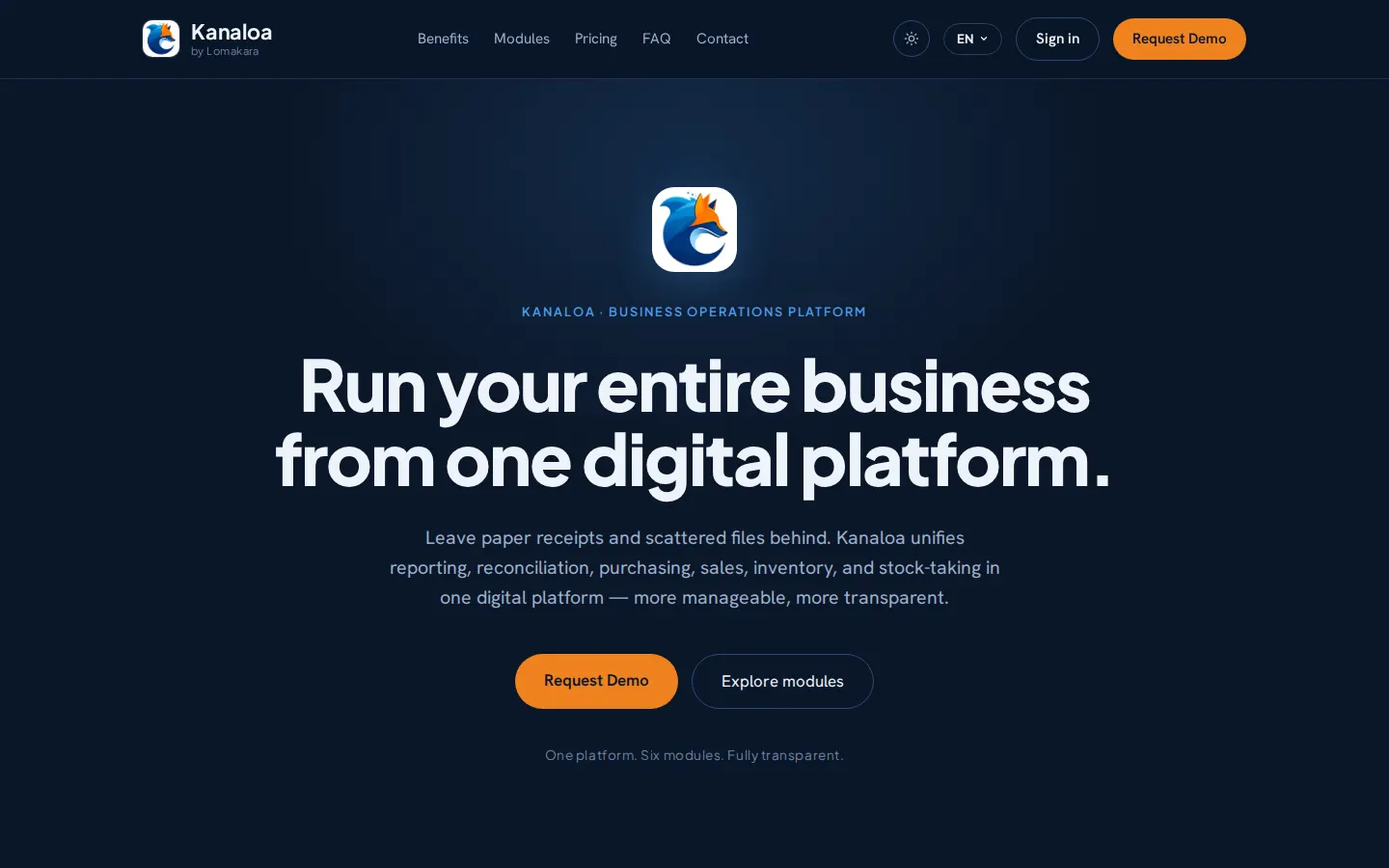
Kanaloa brings reporting, reconciliation, purchasing, sales, inventory and stock-taking into one connected platform. Each company and branch keeps its own data, separate and secure.
For the team, the biggest change is simple: everyone now works from the same live information. Purchasing, sales, the workshop and the owner look at the same orders and the same stock, instead of chasing chats and paper notes to find out what happened. Less time goes into asking, checking and copying things between places, and more time goes into the actual work.
For the owner, the business is finally visible in one place. The morning check that used to take a round of questions is now one screen.
How it’s built
Once a part of the design is agreed with the owner, AI agents take it from there. They plan the work, build it and check it against the design. I review the result and sign off before anything ships.
I own Kanaloa end to end. The agents do most of the building, but the decisions stay with me: what the product should do, how it should feel for the team, and when something is good enough to release. Designing with the owner keeps the product grounded in real work, and having agents do the building means a good idea from a walkthrough with the owner can reach the team quickly.
What I learned
- Start from the routine, not the feature list. When you follow a real day step by step, the features you need become obvious, and the ones you don’t need never get built.
- The people who do the work are the best designers. The owner and the team know exactly where their day slows down. My job was to listen, turn it into a design and keep it simple.
- One shared system beats many good tools. The real gain didn’t come from any single screen. It came from everyone working from the same information.
Want to see it?
Kanaloa keeps growing alongside the team that helped design it. You can read more about it at lomakara.com/kanaloa.
If your business runs on paper notes, spreadsheets and WhatsApp, and you want one system built around your own routine, let’s talk.